Decentriq · data clean rooms for AI

From a specialist's tool to an enterprise data-collaboration platform.

Banks, insurers and hospitals need to collaborate on sensitive data to unlock AI insights, without ever exposing it.

Role
Head of Product Design, Design Manager
Company
Decentriq
Scope
Platform redesign & design system
50%
less development time
75%
product adoption growth in 1 year
In short
Problem
A fragmented, highly technical experience stalled the sales cycle for non-technical buyers and capped growth in the MarTech ecosystem.
My role
As Head of Product Design I led the redesign and owned the token-based design system, which I built on top of an open-source system and shipped with a developer in four months.
Key decision
Make the privacy legible: every result labelled aggregate-only and every step showing what stays inside the enclave, so a non-technical team could trust a product it can't see into.
Outcome
50% less development time from the new system, 75% product adoption growth in 1 year, and a specialist tool that became something an enterprise team could adopt.
app.decentriq.com/insightsLive prototype
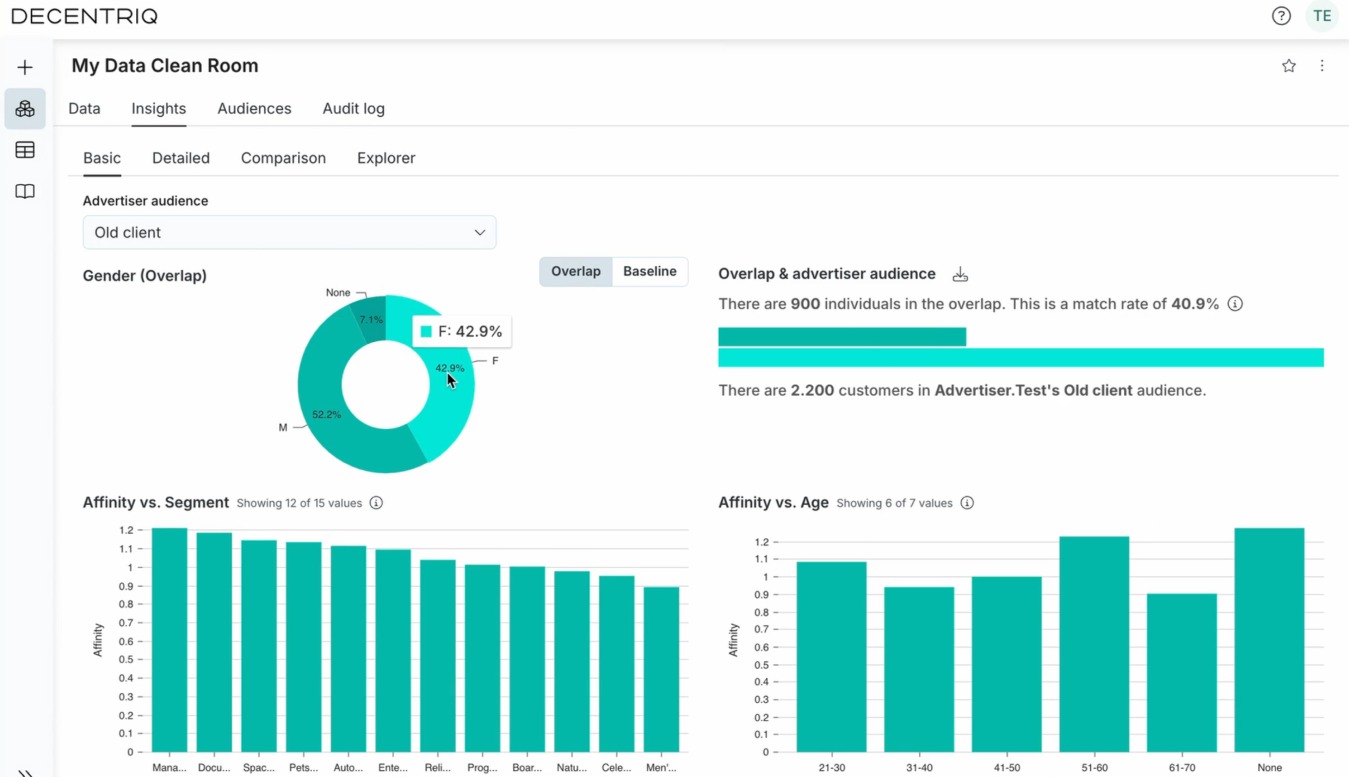
Decentriq insights screen
Two companies see exactly where their audiences overlap, and the affinity between them, without either side ever exposing a single row of data.
The problem

A privacy technology only specialists could use.

Banks, insurers and hospitals increasingly need to collaborate on sensitive data to unlock AI insights, without ever exposing it. Decentriq made that possible, but the experience was fragmented and highly technical, so it stalled with the non-technical stakeholders who actually sign off, and capped the platform's growth in the MarTech ecosystem.

Our job was to take a specialist's tool and make it something both sides of a collaboration, technical and not, could trust and run at scale.

From a specialist's tool
to an enterprise platform.

Same core technology, a very different audience: designed so non-technical stakeholders could trust it, and adopt it, at scale.

The decision

Make the privacy legible.

People can't trust what they can't see, and the whole point of a clean room is that you can't see the other side's data. So I designed the guarantee into the interface: every result labelled as an aggregate, every step showing what stays inside the enclave and what leaves it. The safety had to be visible, not just true.

The core flow

Setting up a collaboration, and reading the result.

Each flow started with discovery, watching how media and analytics teams actually work together and where the old product slowed them down. I designed and built each one, put it in front of real users, and iterated. The screens below are live, so click through them.

app.decentriq.com/data-clean-room
The end-to-end workflow: provision, request, approve, and return insights, all inside the enclave.

Create a clean roomSet up a collaboration and provision it in the enclave.

  1. 1Type & roleMedia or analytics, and your seat
  2. 2Add participantsInvite the other side
  3. 3CollaborationsOverlap, insights, lookalike
  4. 4Details & reviewName it, then a final check
  5. 5PublishLocked and provisioned in the enclave
app.decentriq.com/clean-rooms/newLive prototype

Read the overlap and build an audienceSee the match rate and affinity, never the raw rows.

  1. 1Open the clean roomParticipants, data and status
  2. 2Read the overlapAggregate match rate, no raw rows
  3. 3Explore the insightsAffinity across shared segments
  4. 4Build an audienceTurn the overlap into a segment
app.decentriq.com/clean-rooms/q3-overlapLive prototype
The other side of the room

A clean room has two sides, and each has to trust it on its own terms. The data owner sees the same overlap and affinity, in the same aggregate-only form, and never the advertiser's member list. Designing for both seats at once was the heart of the multi-persona problem.

The publisher's seatThe same clean room, seen from the data owner's side.

  1. 1The publisher's seatThe same room, the other side
  2. 2Read the shared overlapAggregate match rate, no member list
  3. 3Explore the insightsAffinity, still only aggregates
  4. 4Switch seatsFlip back to the advertiser
app.decentriq.com/clean-rooms/q3-overlapLive prototype
Did it land?

Tested with both sides, before rollout.

I put the redesigned flows in front of real users on both sides of a collaboration, technical and non-technical, to check they held up without a walkthrough. What we learned shaped the final workflows and the language across the platform. Underneath, a token-based design system I designed and built with one developer over four months kept every one of these screens consistent.
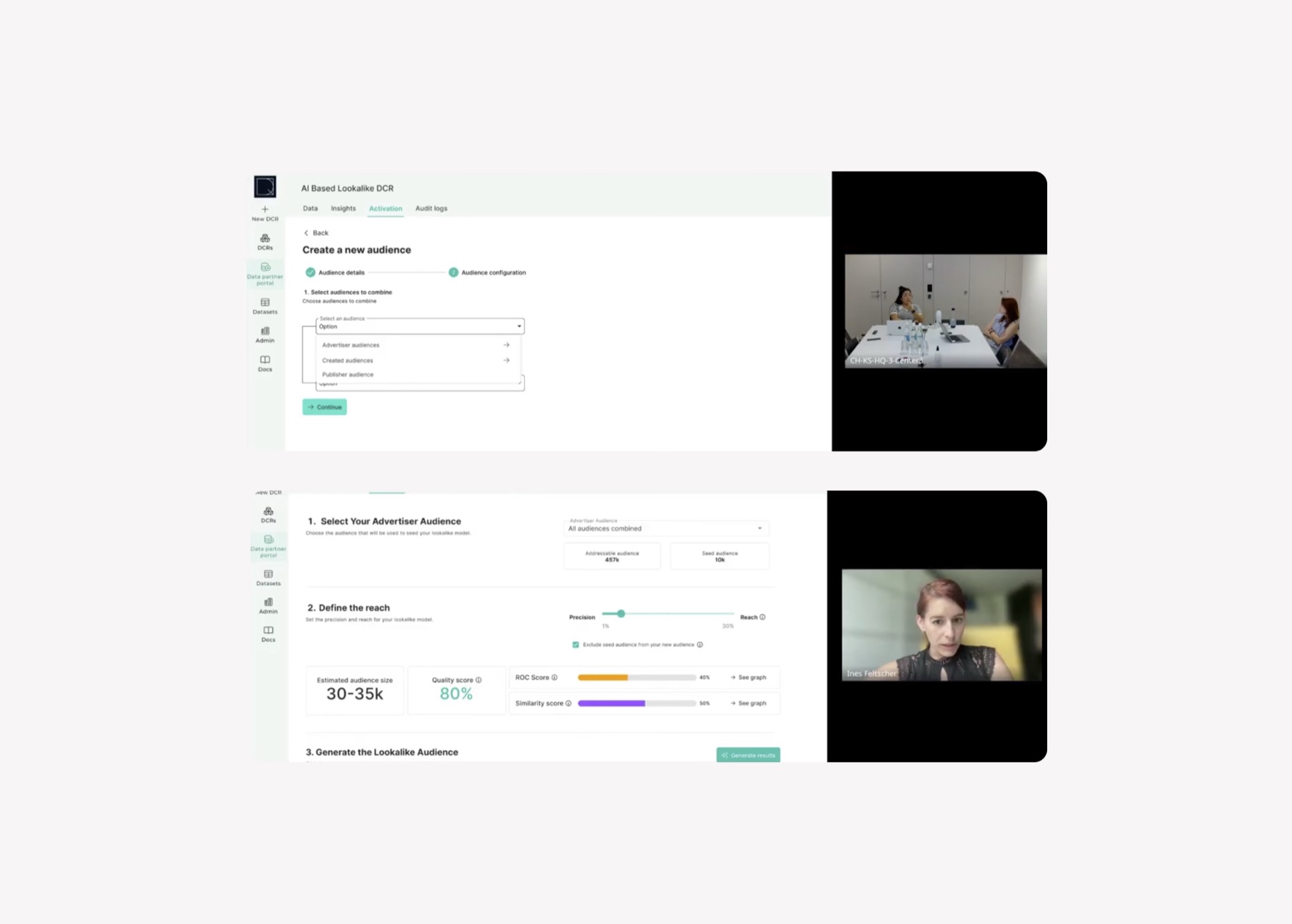
Decentriq user testing sessions: participants moving through the redesigned audience flows on a recorded call
User testing sessions: watching people move through the redesigned flows, both in the room and remote.
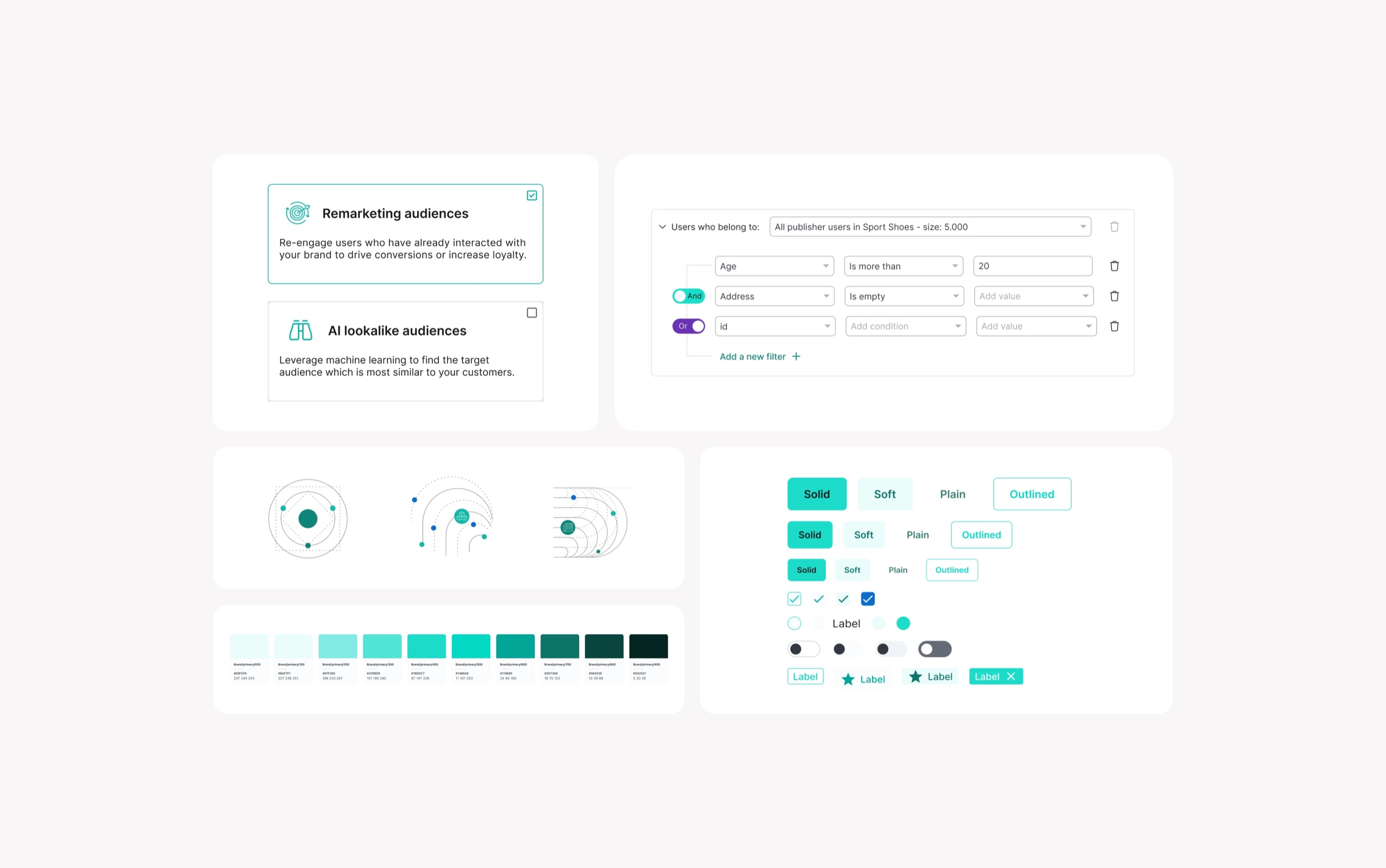
The Decentriq design system: components, tokens, and patterns
The design system underneath: audience patterns, iconography, colour tokens and components, one consistent language.
The rest of the platform

Around the core collaboration, two more surfaces: a network to find publishers and data partners, and in-enclave dataset preparation, so teams could get their data ready without it ever leaving their control.

The Decentriq networkFind publishers and data partners to collaborate with.

  1. 1Browse the networkPublishers, data partners, collaborators
  2. 2Open a partnerSegments, matching ID, countries
  3. 3Reach outContact them to start a clean room
app.decentriq.com/networkLive prototype

Datasets and transformationsPrepare and transform data inside the enclave.

  1. 1Open your datasetsEncrypted with your own key
  2. 2Set up a transformationPick a type and a dataset
  3. 3Transform in-enclaveHash, filter or adjust the schema
  4. 4Ready to collaborateA new dataset, provenance attached
app.decentriq.com/datasetsLive prototype
What changed

More confidence, and room to grow in a regulated market.

The redesign, the design system and the new features streamlined the workflows, gave non-technical teams the confidence to adopt, and strengthened the product's position in a highly regulated market.

New design system shipped
50%
development time reduced
Platform usage in Media
2023 vs 2024
active publishers
active advertisers
campaigns
20242023
New features and platform updates
75%
Product adoption growth in 1 year
Go to next →